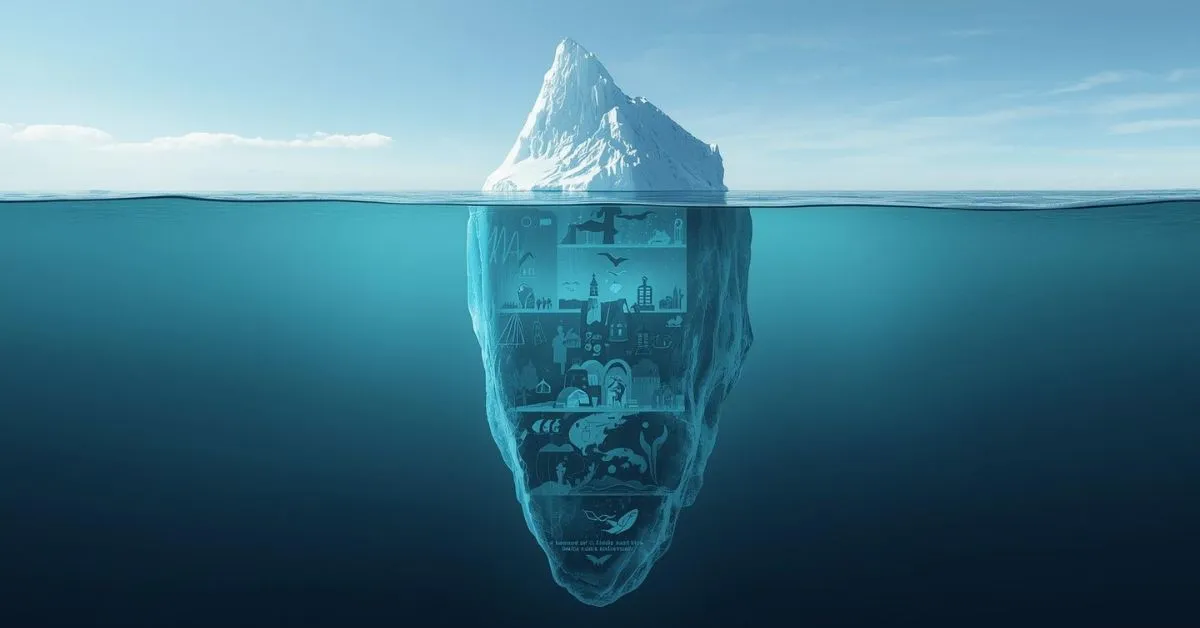
Culture is a lot like an iceberg floating in the ocean. What we see on the surface food, clothes, language, and festivals is only a small part of it.
Just like most of an iceberg stays hidden underwater, many parts of culture are invisible. Things like beliefs, values, and ways of thinking live beneath the surface.
This iceberg metaphor helps us understand why cultures can feel confusing at first. When we look deeper, we start to understand people better.
What Is the Iceberg Metaphor for Culture?
The iceberg metaphor explains that culture has two levels:
- Visible culture (the tip of the iceberg)
- Invisible culture (the massive part below the water)
Metaphor:
Culture is an iceberg what you see is small, but what you don’t see controls everything.
The Tip of the Iceberg: Visible Culture
This includes:
- Food
- Clothing
- Language
- Music
- Festivals
These are easy to notice and easy to learn but they don’t explain why people think or behave the way they do.
Beneath the Surface: Hidden Culture
This includes:
- Beliefs
- Values
- Attitudes
- Communication styles
- Ideas about time, respect, and family
This part is invisible, but it shapes behavior the most.
20 Iceberg Metaphors for Culture
Below are 20 clear, natural metaphors, each with meaning, explanation, and two examples.
1. Culture is an iceberg floating in plain sight
Meaning: Most cultural elements are hidden
Explanation: What’s visible is only a small part
Examples:
- Greetings are seen, but respect rules are hidden
- Food is visible, values behind it are not
2. Traditions are the tip; beliefs are the weight below
Meaning: Beliefs give traditions power
Explanation: Without beliefs, traditions fade
Examples:
- Festivals show joy; faith sustains them
- Customs appear simple but carry deep meaning
3. Language is the ice; values are the ocean
Meaning: Words float on deeper values
Explanation: Communication styles depend on beliefs
Examples:
- Silence means respect in some cultures
- Direct speech feels rude in others
4. Manners are seen; morals are submerged
Meaning: Behavior reflects hidden ethics
Explanation: Actions come from inner rules
Examples:
- Eye contact shows confidence in one culture
- It shows disrespect in another
5. Food sits above water; history lies below
Meaning: Cuisine carries untold stories
Explanation: Recipes are shaped by past struggles
Examples:
- Simple meals reflect survival history
- Spices tell stories of trade
6. Dress is visible identity; values are invisible identity
Meaning: Clothing doesn’t define culture fully
Explanation: Values guide how dress is interpreted
Examples:
- Modesty rules vary across cultures
- Uniforms signal deeper discipline
7. Festivals sparkle above; meaning sleeps below
Meaning: Celebrations hide deep purpose
Explanation: Rituals often honor beliefs
Examples:
- Holidays represent faith
- Parades hide historical pain
8. Rules float; expectations sink
Meaning: Unspoken rules matter more
Explanation: Expectations guide behavior silently
Examples:
- Time punctuality differs culturally
- Personal space expectations vary
9. Smiles show; emotions stay underwater
Meaning: Emotional expression is cultural
Explanation: Feelings are managed differently
Examples:
- Smiling hides discomfort
- Calm faces mask stress
10. Greetings are ice; respect is depth
Meaning: Respect shapes interaction
Explanation: Greetings reflect hierarchy
Examples:
- Bowing shows honor
- Handshakes show equality
11. Symbols float; meanings sink
Meaning: Symbols carry deep interpretation
Explanation: Objects mean different things
Examples:
- Colors symbolize mourning or joy
- Gestures change meaning
12. Laws are visible; ethics are hidden
Meaning: Ethics guide law interpretation
Explanation: Morality shapes justice
Examples:
- Honesty valued differently
- Authority questioned or obeyed
13. Education shows skills; values shape thinking
Meaning: Learning reflects belief systems
Explanation: Teaching styles are cultural
Examples:
- Questioning teachers encouraged
- Silence preferred elsewhere
14. Humor floats; boundaries sink
Meaning: Jokes depend on cultural limits
Explanation: Humor reflects sensitivity
Examples:
- Sarcasm appreciated
- Sarcasm seen as rude
15. Body language is ice; intention is water
Meaning: Gestures can mislead
Explanation: Meaning depends on culture
Examples:
- Nods mean yes or no
- Hand signs change meaning
16. Timekeeping is visible; time values are hidden
Meaning: Time is culturally understood
Explanation: Punctuality has meaning
Examples:
- Being late is rude
- Being late is normal
17. Family roles float; power structures sink
Meaning: Authority is culturally defined
Explanation: Family hierarchy matters
Examples:
- Elders lead decisions
- Equality is expected
18. Work habits show; motivation hides
Meaning: Work ethic is cultural
Explanation: Purpose differs by culture
Examples:
- Work for survival
- Work for identity
19. Religion appears in rituals, not always beliefs
Meaning: Faith is deeply personal
Explanation: Practice doesn’t equal belief
Examples:
- Public rituals observed
- Private faith differs
20. Behavior is the iceberg’s tip; worldview is the base
Meaning: Actions come from perspective
Explanation: Worldview shapes reality
Examples:
- Individual vs collective thinking
- Risk vs security focus
Practical Exercise: Iceberg Metaphor & Culture
10 Questions with Answers
1. What does the iceberg metaphor explain?
Answer: That most cultural elements are hidden.
2. What represents the tip of the iceberg?
Answer: Visible culture like food and dress.
3. What lies below the surface?
Answer: Beliefs, values, and attitudes.
4. Why is visible culture misleading?
Answer: It doesn’t explain behavior fully.
5. How does the metaphor help communication?
Answer: It encourages cultural sensitivity.
6. Can two cultures share the same tip but differ underneath?
Answer: Yes.
7. Why are misunderstandings common across cultures?
Answer: Hidden values are ignored.
8. Is language part of visible or hidden culture?
Answer: Visible but guided by hidden values.
9. How can this metaphor help students?
Answer: It promotes deeper cultural understanding.
10. What is the main lesson of the iceberg metaphor?
Answer: Never judge culture by what you see.
Conclusion
Culture isn’t shallow it’s deep, layered, and powerful.
The iceberg metaphor reminds us to look beyond appearances, ask questions, and respect what we can’t immediately see.
Because when it comes to culture, the most important parts are always underwater.
Discover More Article:
- 20 Silver Bullet Metaphor With Examples And Explanation (2026)
- 20 Iceberg Metaphor With Explanation And Examples (2026)