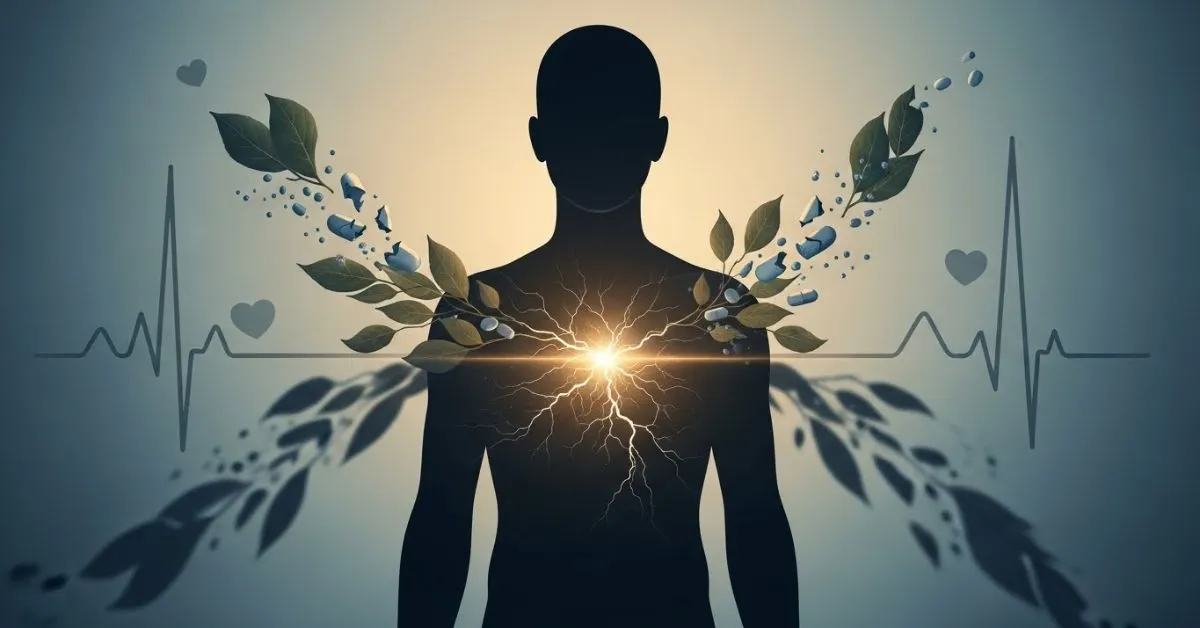
Sometimes, we use illness to explain feelings, problems, or situations in life.
When we say things like “fear is a virus” or “stress is eating me,” we are not talking about real sickness. We are using illness as a metaphor to make our words clearer and stronger.
In this article, I’ll show you how illness becomes a powerful way to explain emotions and experiences.
Illness as a Metaphor (Meaning)
Illness as a metaphor represents internal conflict, emotional pain, moral decay, social problems, or personal transformation. It suggests that something beneath the surface needs attention, healing, or change.
20 Metaphors Using Illness (With Meaning, Explanation & Examples)
1. Burnout is a slow fever
Meaning: Long-term exhaustion
Explanation: Like a fever, it builds quietly until it can’t be ignored.
Examples:
- Burnout became a slow fever I kept ignoring.
- His constant stress felt like a fever that never broke.
2. Guilt is a lingering infection
Meaning: Unresolved remorse
Explanation: It stays until treated with honesty or forgiveness.
Examples:
- Guilt spread like an infection through her thoughts.
- His silence let the infection grow worse.
3. Toxic relationships are emotional viruses
Meaning: Harmful influence
Explanation: They spread negativity and drain energy.
Examples:
- That friendship was an emotional virus.
- Negativity spread faster than a virus in the room.
4. Anxiety is a racing heartbeat
Meaning: Constant fear
Explanation: It keeps the body and mind in panic mode.
Examples:
- Anxiety kept my heart racing all night.
- His thoughts beat like a panicked pulse.
5. Depression is emotional paralysis
Meaning: Loss of motivation
Explanation: You feel unable to move forward.
Examples:
- Depression left her emotionally paralyzed.
- He stood still, trapped in paralysis.
6. Fear is a chronic condition
Meaning: Persistent worry
Explanation: It becomes part of daily life.
Examples:
- Fear became a chronic condition.
- He learned to live with it like an illness.
7. Grief is a wound that won’t close
Meaning: Deep loss
Explanation: Healing takes time and care.
Examples:
- Grief reopened the wound every night.
- Time slowly stitched the wound closed.
8. Jealousy is emotional poisoning
Meaning: Self-destructive envy
Explanation: It harms the one who holds it.
Examples:
- Jealousy poisoned his happiness.
- Her thoughts turned toxic.
9. Stress is mental inflammation
Meaning: Overload
Explanation: Too much pressure causes internal swelling.
Examples:
- Stress inflamed her mind.
- His reactions showed mental inflammation.
10. Silence is untreated pain
Meaning: Avoidance
Explanation: Ignoring problems worsens them.
Examples:
- Silence left the pain untreated.
- He refused treatment by staying quiet.
11. Corruption is a social disease
Meaning: Moral decay
Explanation: It spreads through systems.
Examples:
- Corruption infected the institution.
- The disease reached every level.
12. Loneliness is emotional malnutrition
Meaning: Lack of connection
Explanation: We need relationships to survive.
Examples:
- Loneliness starved her emotionally.
- He lived on empty connections.
13. Regret is a recurring symptom
Meaning: Repeated remorse
Explanation: It resurfaces without resolution.
Examples:
- Regret returned like a symptom.
- Nights triggered it again.
14. Hatred is a spreading cancer
Meaning: Destructive anger
Explanation: It consumes everything around it.
Examples:
- Hatred grew unchecked.
- It destroyed relationships from within.
15. Addiction is borrowed comfort
Meaning: False relief
Explanation: Temporary ease with long-term damage.
Examples:
- Addiction promised comfort it couldn’t keep.
- He paid interest on borrowed relief.
16. Dishonesty is a hidden illness
Meaning: Moral weakness
Explanation: It damages quietly.
Examples:
- Lies hid like an illness.
- Truth was the cure.
17. Trauma is a scar beneath the skin
Meaning: Lasting impact
Explanation: Invisible but permanent.
Examples:
- Trauma shaped her reactions.
- The scar remained unseen.
18. Hope is the immune system
Meaning: Inner strength
Explanation: It fights despair.
Examples:
- Hope kept him alive.
- Faith strengthened her immunity.
19. Healing is relearning how to breathe
Meaning: Recovery
Explanation: Slow and intentional.
Examples:
- Healing taught her patience.
- He learned to breathe again.
20. Self-awareness is the diagnosis
Meaning: Understanding the problem
Explanation: Healing begins with recognition.
Examples:
- Awareness revealed the illness.
- Diagnosis changed everything.
Practical Exercise: Understanding Illness as a Metaphor
Q1. What does illness symbolize in metaphor?
Answer: Inner conflict or imbalance.
Q2. Why do writers use illness metaphorically?
Answer: To express invisible pain.
Q3. Can illness metaphors describe emotions?
Answer: Yes, very effectively.
Q4. What does “healing” usually represent?
Answer: Growth, acceptance, or change.
Q5. Is illness metaphor always negative?
Answer: No, it can lead to transformation.
Q6. What emotion is often shown as infection?
Answer: Guilt or shame.
Q7. What does a “cure” symbolize?
Answer: Resolution or truth.
Q8. Why is hope compared to immunity?
Answer: It protects against despair.
Q9. Can societies have “illnesses”?
Answer: Yes corruption, injustice, hatred.
Q10. What is the first step toward healing?
Answer: Awareness and acknowledgment.
Conclusion
IIllness as a metaphor reminds us that pain is often a message, not just a problem. If emotional, mental, or social, every “symptom” points to something that needs care, awareness, and change. Healing begins the moment we stop ignoring the signs and start listening to what they’re trying to tell us.
Discover More Article:
- 20 Quicksand Metaphor With Explanation And Examples (2026)
- 20 Unicorn Metaphor With Examples And Explanation (2026)

Emerson Hayes is a U.S.-based writer passionate about language, creativity, and literary expression. At Mitaphar.com, Emerson explores metaphors and storytelling that make complex ideas feel vivid, relatable, and inspiring.