Have you ever watched a film and felt something deep without the movie ever saying it out loud? I remember sitting alone one night, watching a simple scene a character staring at the rain through a window.
Nothing dramatic happened, but it hit me hard. I was going through a rough phase, and that rain felt like my own silence on screen. That’s when I realized films don’t just tell stories they show feelings through metaphors. I didn’t need dialogue to understand the pain; the image did all the work.
Once I noticed it, I started seeing metaphors everywhere in shadows, weather, broken objects, even long pauses. That moment changed how I watch movies. Now, I don’t just watch films, I read them.
What Is a Metaphor in Film?
A metaphor in film is when a visual, character, object, or situation represents a deeper meaning beyond its literal role.
Instead of saying this character feels trapped, the film shows:
- closed doors
- cages
- endless hallways
- or a character framed behind glass
That’s metaphor.
20 Powerful Metaphors in Film (With Meaning & Examples)
1. The Journey as a Metaphor for Life
Metaphor: The road unfolds like a lifetime.
Meaning:
Life is a process of growth, struggle, and discovery.
Explanation:
Many films use physical travel to represent inner change.
Examples:
- A character leaves home and returns transformed.
- A long road trip mirrors emotional healing.
2. Darkness as a Metaphor for Fear
Metaphor: Darkness swallows the truth.
Meaning:
Fear, ignorance, or the unknown.
Explanation:
Lighting often reflects emotional states.
Examples:
- Scenes turn darker as danger increases.
- A character steps into shadows during moral conflict.
3. Light as a Metaphor for Hope
Metaphor: Light breaks through despair.
Meaning:
Hope, clarity, or redemption.
Explanation:
Bright light often signals emotional release.
Examples:
- Sunrise after tragedy.
- A character steps into the light at the end.
4. Water as a Metaphor for Emotion
Metaphor: Emotions move like water.
Meaning:
Feelings, cleansing, or change.
Explanation:
Water reflects emotional flow or overwhelm.
Examples:
- Rain during heartbreak.
- A character submerged to show emotional weight.
5. Fire as a Metaphor for Destruction or Passion
Metaphor: Fire reveals what can’t survive.
Meaning:
Anger, passion, or rebirth.
Explanation:
Fire destroys but also purifies.
Examples:
- Burning objects after emotional loss.
- Flames during moments of rage.
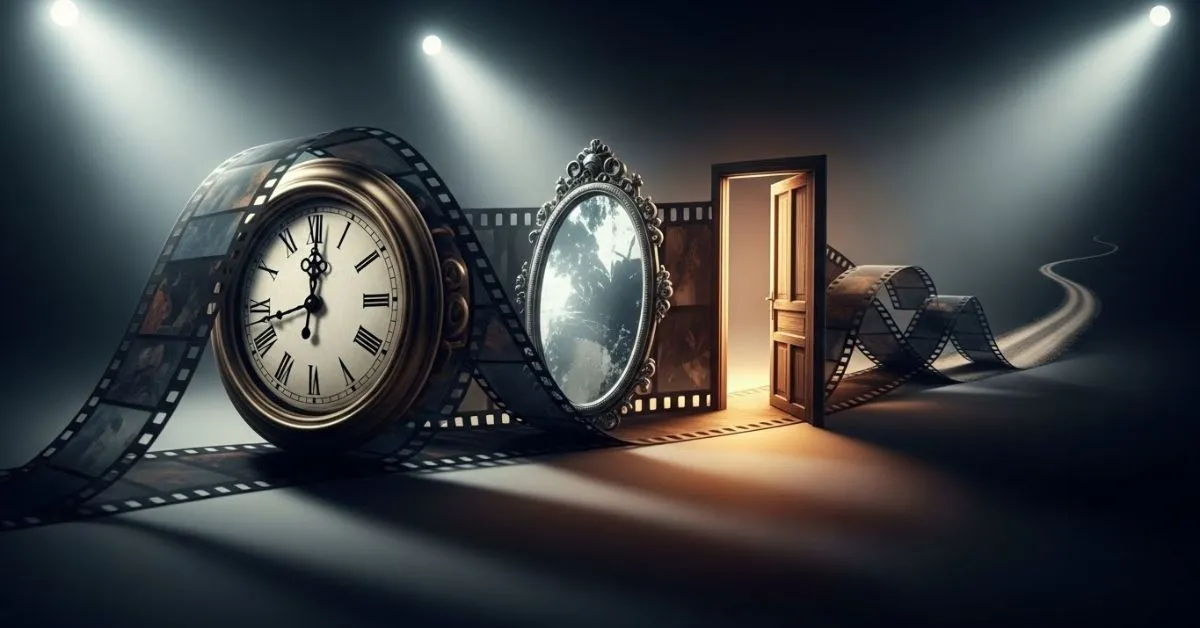
6. Mirrors as a Metaphor for Identity
Metaphor: The mirror questions who I am.
Meaning:
Self-reflection or inner conflict.
Explanation:
Mirrors visually split identity.
Examples:
- A character avoids their reflection.
- Cracked mirrors during identity crises.
7. Masks as a Metaphor for False Identity
Metaphor: The mask hides the truth.
Meaning:
Deception or social roles.
Explanation:
Masks represent what characters hide.
Examples:
- A confident character alone removes the mask.
- Costume changes reflect internal shifts.
8. Cages as a Metaphor for Control
Metaphor: Freedom rattles behind bars.
Meaning:
Oppression or limitation.
Explanation:
Visual confinement mirrors emotional imprisonment.
Examples:
- Characters framed behind fences.
- Locked rooms symbolizing lack of choice.
9. Weather as a Metaphor for Mood
Metaphor: The storm speaks before the character does.
Meaning:
Emotional atmosphere.
Explanation:
Nature reflects inner states.
Examples:
- Thunder during conflict.
- Clear skies after resolution.
10. Time as a Metaphor for Loss
Metaphor: Time steals without asking.
Meaning:
Mortality and regret.
Explanation:
Clocks and aging symbolize impermanence.
Examples:
- Constant ticking sounds.
- Time jumps showing missed moments.
11. Doors as a Metaphor for Choice
Metaphor: Every door demands a decision.
Meaning:
Opportunity or change.
Explanation:
Doors symbolize transition.
Examples:
- Hesitating before opening a door.
- A door closing behind a character.
12. Windows as a Metaphor for Desire
Metaphor: The world waits behind glass.
Meaning:
Longing or separation.
Explanation:
Windows divide observer and experience.
Examples:
- Watching life from indoors.
- Foggy glass during emotional distance.
13. Shadows as a Metaphor for Guilt
Metaphor: The past follows like a shadow.
Meaning:
Hidden guilt or trauma.
Explanation:
Shadows visually represent emotional weight.
Examples:
- A shadow entering before the character.
- Darkness clinging during moral failure.
14. Silence as a Metaphor for Truth
Metaphor: Silence says what words can’t.
Meaning:
Unspoken emotion.
Explanation:
Silence forces the audience to feel.
Examples:
- Long pauses after conflict.
- No dialogue during grief.
15. Broken Objects as a Metaphor for Broken People
Metaphor: What’s broken reflects who is.
Meaning:
Emotional damage.
Explanation:
Physical damage mirrors inner wounds.
Examples:
- Shattered glass after betrayal.
- Worn items tied to memory.
16. Food as a Metaphor for Love or Control
Metaphor: Love is served, not said.
Meaning:
Care, power, or connection.
Explanation:
Meals show relationships.
Examples:
- Cooking for someone you love.
- Withholding food as dominance.
17. Stairs as a Metaphor for Power
Metaphor: Power always looks down.
Meaning:
Hierarchy or ambition.
Explanation:
Vertical movement symbolizes status.
Examples:
- Powerful characters shot from below.
- Climbing stairs after success.
18. Falling as a Metaphor for Failure
Metaphor: The fall comes before understanding.
Meaning:
Loss or moral collapse.
Explanation:
Physical falls mirror emotional ones.
Examples:
- A literal fall after bad choices.
- Slow-motion collapse scenes.
19. Music as a Metaphor for Inner Voice
Metaphor: Music speaks what the heart hides.
Meaning:
Emotion or memory.
Explanation:
Soundtracks guide feeling.
Examples:
- Theme music returning with memory.
- Silence replacing music during numbness.
20. Death as a Metaphor for Transformation
Metaphor: Something must end for something to begin.
Meaning:
Change or rebirth.
Explanation:
Not all deaths are literal.
Examples:
- A character sheds an old identity.
- Symbolic deaths before renewal.
Practical Exercise: Understanding Metaphor in Film
10 Questions with Answers
1. What is a film metaphor?
A visual or narrative element representing a deeper idea.
2. Why do filmmakers use metaphors?
To communicate meaning emotionally, not directly.
3. Is metaphor always visual in film?
No sound, silence, and editing can also be metaphoric.
4. Can one scene have multiple metaphors?
Yes, layered metaphors are common.
5. Are metaphors intentional?
Often yes, but sometimes subconscious.
6. Do metaphors change by culture?
Yes, symbols can mean different things culturally.
7. Is symbolism the same as metaphor?
Symbolism is a tool; metaphor is the meaning it creates.
8. How can I spot metaphors in films?
Watch repeated visuals, lighting, and patterns.
9. Do all films use metaphor?
Most do, even unintentionally.
10. Does metaphor improve storytelling?
Yes it adds depth, emotion, and rewatch value.
Conclusion
Once you understand metaphor in film, you stop watching movies passively.
You start listening to images.
You start feeling silence.
You start reading the screen.
And that’s when film becomes more than a story it becomes a language.
Discover More Article

I’m Madison Cole, the author behind mitaphar.com. I write simple, clear, and reliable health and pharmaceutical content to help readers understand complex topics with ease.