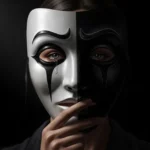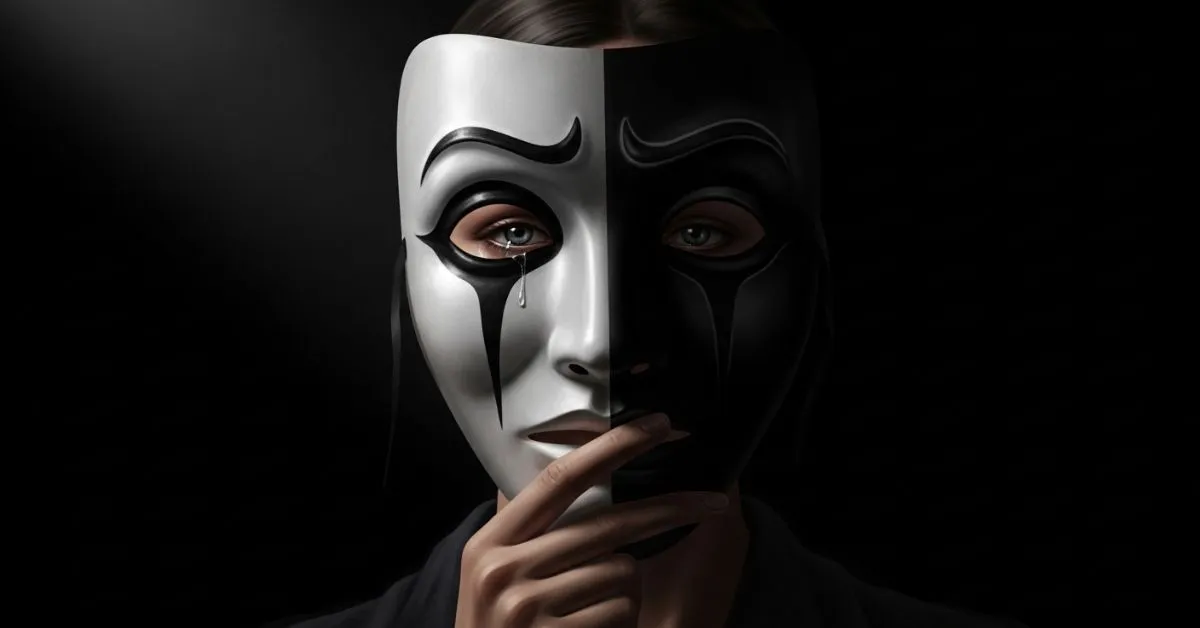
Sometimes in life, people don’t show their real feelings. Instead, they hide them behind a “mask.” A mask can be a powerful metaphor because it represents the way someone pretends to be something they are not.
We all wear a mask at times maybe to protect our feelings or to fit in with others. When writers use a metaphor for a mask, they are usually talking about hidden emotions or secret identities.
It helps us understand how people can look happy on the outside while feeling something different inside.
In this article, I’ll share what the mask metaphor means and how it is used in everyday language.
20 Metaphors for Mask
1. A Painted Smile
Metaphor: Her happiness was a painted smile hiding deep sadness.
Meaning: Fake happiness covering real emotions.
Explanation: Like makeup painted on a face, the smile looks real but hides the truth underneath.
Examples:
- He greeted everyone with a painted smile despite his worries.
- Her painted smile fooled everyone at the party.
2. A Curtain Over the Face
Metaphor: His calm attitude was a curtain over his true feelings.
Meaning: Something that hides emotions or intentions.
Explanation: Just like a curtain hides what’s behind it, people sometimes hide their real thoughts.
Examples:
- His jokes were a curtain over his anxiety.
- Politeness became a curtain over her anger.
3. Armor for the Heart
Metaphor: His confidence was armor for his heart.
Meaning: A defense used to hide vulnerability.
Explanation: Armor protects warriors, just like emotional masks protect feelings.
Examples:
- Her sarcasm became armor for her heart.
- His toughness was armor against rejection.
4. A Stage Costume
Metaphor: At work, he wore a stage costume of confidence.
Meaning: Pretending to be someone else.
Explanation: Actors wear costumes to play roles, just like people pretend in certain situations.
Examples:
- Her professionalism felt like a stage costume.
- He wore a costume of calm during the meeting.
5. A Shiny Shield
Metaphor: Humor was a shiny shield hiding his pain.
Meaning: A cheerful behavior hiding sadness.
Explanation: Shields protect people, just like jokes protect someone from emotional exposure.
Examples:
- His jokes were a shiny shield against loneliness.
- Laughter became her shield from criticism.
6. A Velvet Curtain
Metaphor: Her politeness was a velvet curtain over her true thoughts.
Meaning: Gentle behavior hiding real opinions.
Explanation: Velvet curtains hide the stage until the show begins.
Examples:
- His compliments were a velvet curtain over jealousy.
- Kind words became a velvet curtain over frustration.
7. A Paper Wall
Metaphor: His confidence was a paper wall hiding insecurity.
Meaning: A weak disguise that can easily break.
Explanation: Paper walls look like barriers but offer little protection.
Examples:
- His pride was a paper wall over fear.
- Her laughter was a paper wall hiding tears.
8. A Foggy Mirror
Metaphor: Her behavior was a foggy mirror of her real self.
Meaning: Something that hides clarity about identity.
Explanation: A foggy mirror reflects but doesn’t clearly show the truth.
Examples:
- Social media became a foggy mirror of his life.
- Her personality online was a foggy mirror.
9. A Silent Wall
Metaphor: His quietness became a silent wall around his emotions.
Meaning: Emotional distance used to hide feelings.
Explanation: Walls keep others from seeing what’s inside.
Examples:
- After the argument, he built a silent wall.
- Her silence became a wall between them.
10. A Mask of Sunshine
Metaphor: She wore a mask of sunshine even on dark days.
Meaning: Pretending to be happy.
Explanation: Sunshine symbolizes happiness and positivity.
Examples:
- He kept a mask of sunshine during difficult times.
- Her bright attitude was a mask hiding stress.
11. A Glass Window
Metaphor: His calm face was a glass window hiding a storm.
Meaning: Calm appearance hiding chaos inside.
Explanation: Windows appear clear but can hide activity behind them.
Examples:
- Her smile was a glass window over anger.
- His silence hid a storm behind a glass window.
12. A Puppet’s Face
Metaphor: His polite expression felt like a puppet’s face.
Meaning: A controlled or artificial expression.
Explanation: Puppets don’t show real emotion.
Examples:
- The politician spoke with a puppet’s face.
- His forced smile looked like a puppet’s face.
13. A Painted Wall
Metaphor: Her confidence was a painted wall covering cracks.
Meaning: A fake display hiding flaws.
Explanation: Paint hides damage underneath a surface.
Examples:
- His charm was a painted wall over insecurity.
- Her smile painted over sadness.
14. A Borrowed Face
Metaphor: At parties, he wore a borrowed face.
Meaning: Acting like someone else.
Explanation: Borrowing a face suggests pretending to have a different personality.
Examples:
- She wore a borrowed face to impress others.
- His borrowed face disappeared at home.
15. A Mirror Mask
Metaphor: His personality was a mirror mask reflecting others’ expectations.
Meaning: Changing behavior to match what people want.
Explanation: Mirrors reflect what they see rather than showing something original.
Examples:
- His kindness was a mirror mask in social settings.
- She used a mirror mask to please everyone.
16. A Quiet Shadow
Metaphor: His politeness was a quiet shadow over his anger.
Meaning: Hidden negative emotions.
Explanation: Shadows hide details in darkness.
Examples:
- Her calm voice was a shadow over frustration.
- His patience cast a shadow over disappointment.
17. A Locked Box
Metaphor: His smile was a locked box protecting his secrets.
Meaning: A hidden emotional world.
Explanation: Locked boxes hide valuable or secret items.
Examples:
- Her silence became a locked box of emotions.
- His laughter hid feelings inside a locked box.
18. A Thin Veil
Metaphor: Her kindness was a thin veil over jealousy.
Meaning: A weak disguise hiding true feelings.
Explanation: A veil covers something but still allows glimpses through.
Examples:
- His compliments were a thin veil over sarcasm.
- Her smile was a thin veil of politeness.
19. A Stage Light
Metaphor: His charm was a stage light hiding the darkness backstage.
Meaning: A bright personality hiding private struggles.
Explanation: Stage lights illuminate the performance while hiding what happens behind the scenes.
Examples:
- Her laughter was a stage light over loneliness.
- His energy hid exhaustion backstage.
20. A Golden Frame
Metaphor: His reputation was a golden frame around a hidden truth.
Meaning: A beautiful appearance hiding reality.
Explanation: Frames make pictures look better but don’t change the content.
Examples:
- His wealth became a golden frame hiding corruption.
- Her charm was a golden frame over insecurity.
Practical Exercise: Understanding Mask Metaphors
1. What does the metaphor “painted smile” represent?
Answer: Fake happiness hiding true emotions.
2. Which metaphor suggests pretending to be someone else?
Answer: A stage costume.
3. What does “armor for the heart” symbolize?
Answer: Emotional protection from pain.
4. Which metaphor describes a weak disguise?
Answer: A paper wall.
5. What does “thin veil” mean?
Answer: A disguise that only slightly hides the truth.
6. Which metaphor represents emotional distance?
Answer: A silent wall.
7. What does “mirror mask” suggest?
Answer: Changing personality to match others’ expectations.
8. Which metaphor represents hidden secrets?
Answer: A locked box.
9. What does “stage light hiding darkness backstage” symbolize?
Answer: A cheerful public image hiding private struggles.
10. Which metaphor describes fake confidence hiding flaws?
Answer: A painted wall.
Conclusion
Metaphors for a mask help us understand how people hide their true emotions, intentions, or identities. In everyday life, many people wear invisible masks to protect themselves, avoid judgment, or fit into social situations. By comparing these behaviors to things like a painted smile, a thin veil, or a locked box, writers can clearly show the difference between appearance and reality. These metaphors make complex emotions easier to imagine and describe. Whether you’re writing stories, poems, or blog articles, using mask metaphors can add depth and creativity to your work. They remind us that behind every mask, there is often a real story waiting to be understood.
Discover More Article:
- 20 Metaphor for Outcast with Examples and Expalanation (2026)
- Metaphor for Losses: Meaning, Examples and Explanation (2026)
- 20 Metaphor for Tyranny with Meaning and Explanaion (2026)

Harper Lane is a creative writer and language enthusiast who specializes in exploring metaphors, symbolism, and literary expression. Through her work on mitaphar.com, she helps readers understand the beauty and depth of figurative language in everyday life and writing.